

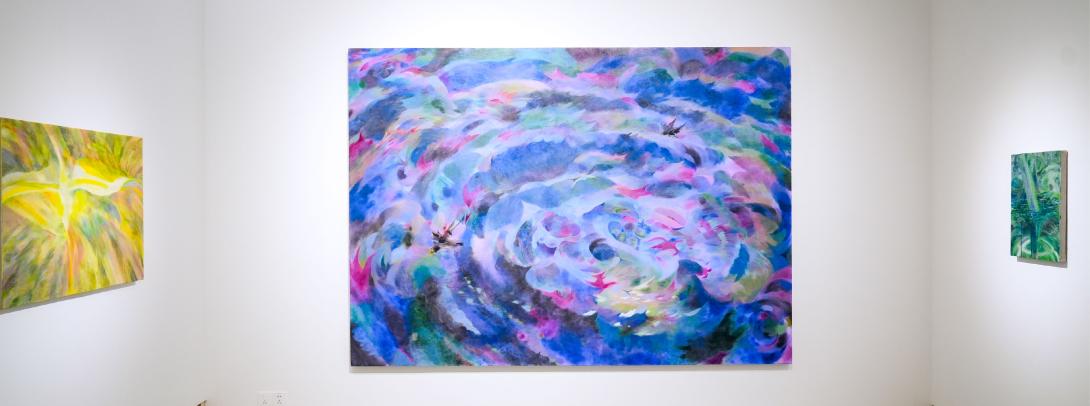
ICA’s latest exhibition Vitalisms II opened on September 18, inviting viewers to reexamine the concept of value through close looking and group discussion of paintings by contemporary Chinese artists.
The exhibition also marks the opening of ICA’s latest two-year artistic research program “Untimely Inheritances” (2026-28), which considers what we inherit from the past and future, and what we choose to do with it. Following an exhibition of paintings last spring focusing on painting’s relationship to writing history, Vitalisms II continues the program’s longer-term investigation into Chinese contemporary painting, this time turning our attention to value -- asking us to reconsider inherited ideas about a painting’s worth, beyond its monetary value.
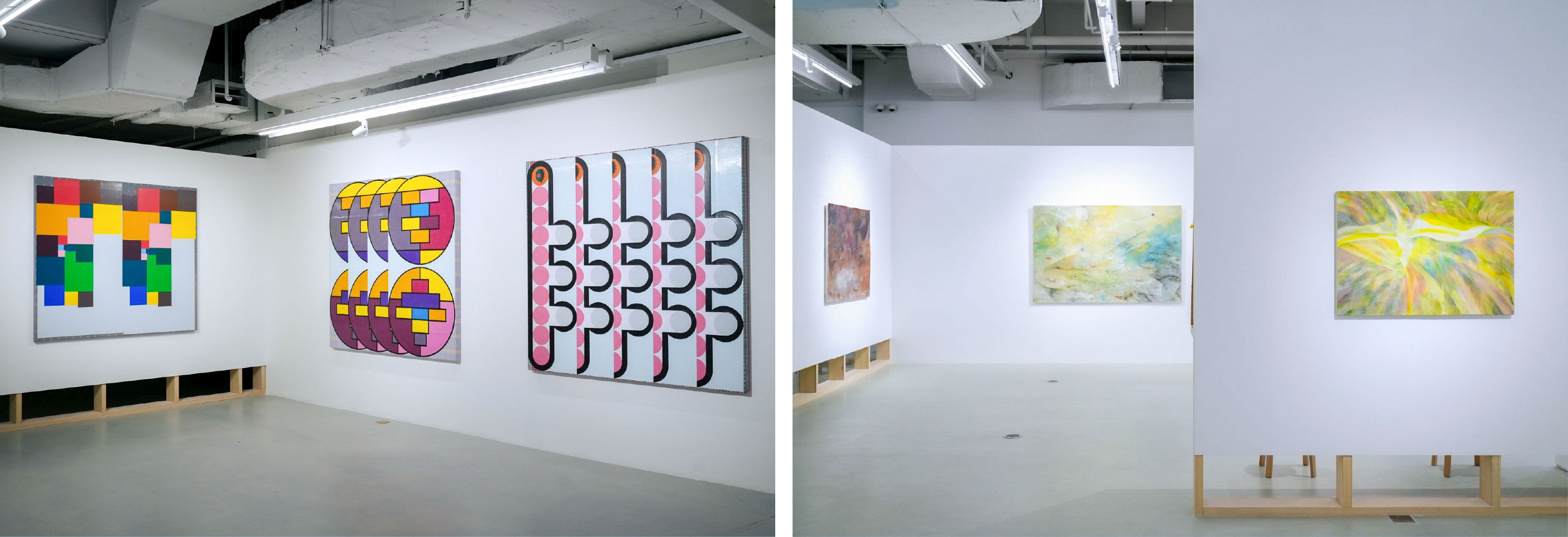
The exhibition features 22 predominantly abstract or non-figurative paintings by seven Chinese artists born in the 1980s and 1990s. The choice of abstract works offers visitors more space to develop their own interpretations rather than look for an explanation in recognizable representations, said Michelle Yeonho Hyun, founding director and curator of ICA.
“We’re so quick to go to the label or the institution’s writing about this artist or about the painting to try to understand what it means before we even spend time with what it is,” she said.
The exhibition is arranged to allow visitors to consider each painting for an extended period of time. The arrangement of the paintings in booth-like spaces draws attention to the different roles a painting can play: an artwork, a cultural artifact, an educational tool, a collectible object, or even a financial asset.
In lieu of conventional exhibition tours or artist lectures, visitors are invited to join weekly group discussions, where they will spend an hour inside each booth, closely examining a particular painting’s use of color, shape, materials, or even traces of the artist’s actions. Facilitated by ICA curators, participants will describe what they see and discuss their impressions with others. Hyun says no prior knowledge of art history or theory is necessary to enjoy the program.
“We live in a very image-saturated culture,” she said. “And yet I think even still we take for granted how closely we can actually look and how much time we might spend [looking at images].”
The works on display include a wide range of influences and styles. The paintings of Beijing-born artist Zhao Yao offer a glimpse of the inspirations behind his works. Some draw on brain-teaser games published in early 2000s educational books and incorporate textiles sourced from rural villages and fabric markets in China.
Another of the featured artists, Wang Xiaofu, born in Wuhan, often places recognizable forms within spaces that hover close to abstraction. Drawing on the visual language of landscape, her paintings explore perception, spatial experience, and invite the viewer to experience her work over a sustained amount of time.
The show runs through December 19, and the ICA will organize several events to accompany the show. Free weekly bilingual group discussions will take place Friday afternoons from October 9 to November 20, and a public roundtable will be held with the artists on December 5.
The ICA will document group discussion participants’ observations and responses to the works and the exhibition as part of their research.