

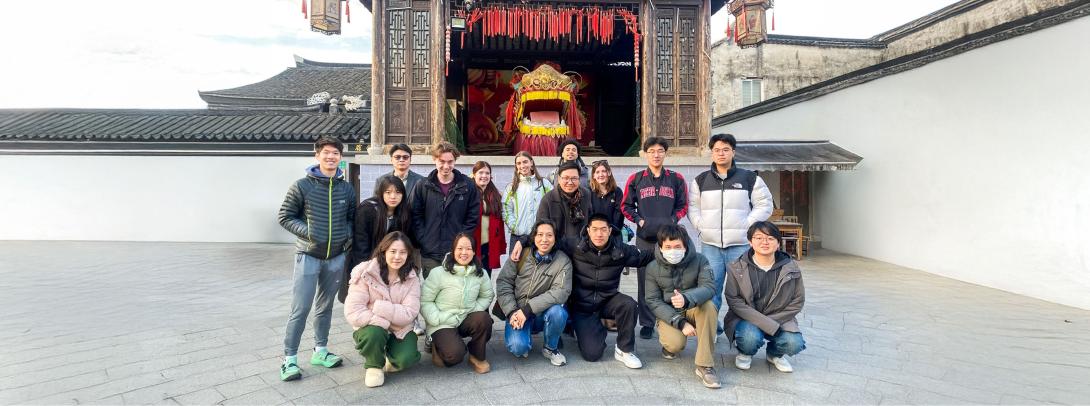
The clock is ticking on Sanlin Old Town. Scheduled for demolition soon after the Spring Festival holiday, the historic community near NYU Shanghai’s campus is disappearing fast. A January term class of students raced to document its lives and places, creating a digital archive that preserves not just buildings, but the voices and experiences of the people who have lived there for generations.
Letter to the Future, an Experience Studio class taught by IMA Clinical Assistant Professor of IMA Ian Zhang Xingchen in collaboration with Community Engaged Learning and the Digital Heritage Lab, allowed 14 students from NYU Shanghai, NYU Abu Dhabi, and NYU to explore the quickly disappearing neighborhood and consider how the architecture and culture of the area should be preserved for future generations.
Sanlin’s built environment stands in stark contrast to Shanghai’s ultra-modern image. “It's very village-style and everything's a one- or two-story house or businesses and it really has a sense of calm that I have gotten in very few other places in Shanghai, says Annie Church ’26, a student in the class. “People really follow their own kind of intuitive pace of life and really don't feel like they're in a rush.”
Annie, a Social Science (Anthropology) and Global China Studies double major, has been working with the Digital Heritage Lab on a long-term project about Sanlin collecting oral histories and 3D scanning the neighborhood streets.
Although she’s already doing research with the Digital Heritage Lab on Sanlin as part of her Capstone project, she joined the J-term class to focus more in-depth on one person’s experience. She and her group interviewed a 6th generation Sanlin resident who opened a small restaurant after retiring from her job as a schoolteacher.
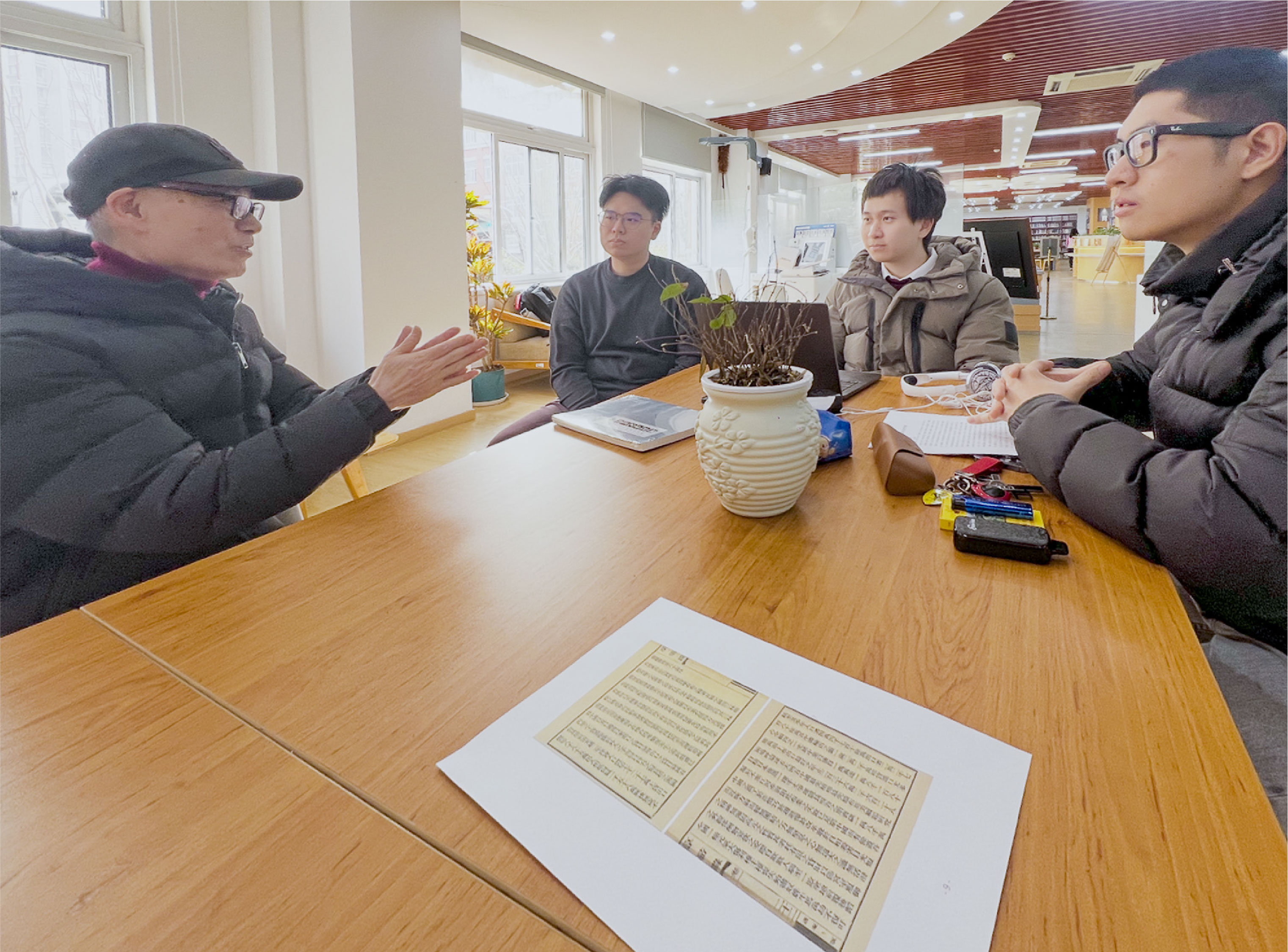
The experience challenged the students’ assumptions. They had expected the restaurant owner to express sadness about leaving her home and business but were surprised by her outlook.
“She talked about how much the area has changed over her lifetime, and how change has always been part of her story,” Annie said. “She felt that, at least through this project, residents were being centered and their needs were being met.”
The class exposed the students to a hidden pocket of the city that is less accessible to non-locals. “I think there's a lot to [learn] about how life in Shanghai has changed,” she says. “It's been such a rapid development, you can really contrast it with the way that people live [in Sanlin].”
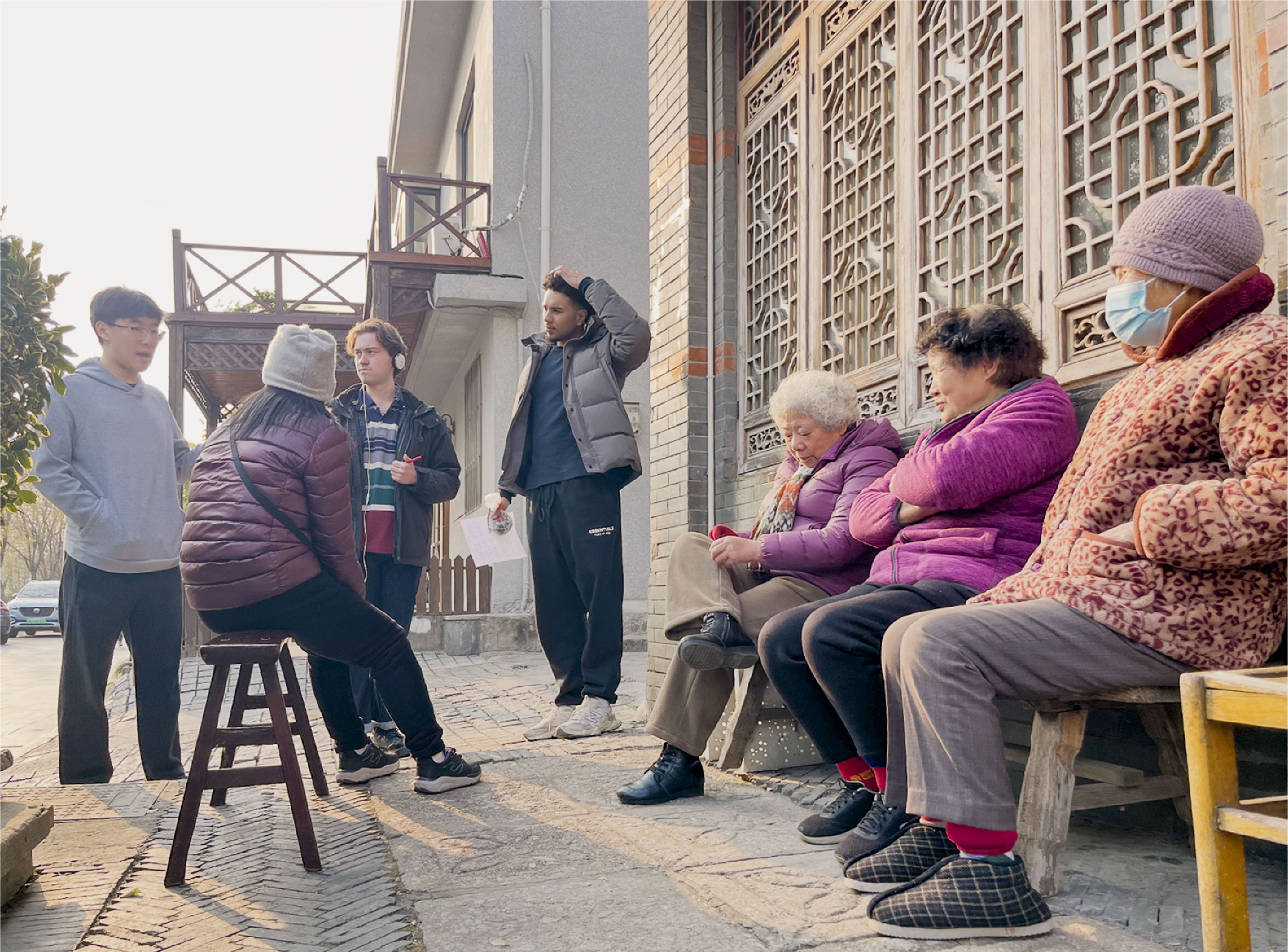
For Alan Zhang, an NYU Tandon senior majoring in Computer Science, the class began as an unexpected opportunity. Visiting Shanghai during winter break to spend time with family, he signed up without knowing quite what to expect.
On the first day, a guided tour of Sanlin led by a local historian quickly reshaped his expectations. What began as a break from the classroom became a chance to reconnect with his hometown. “I really enjoyed talking to the residents and getting to know this place better,” Alan said.
“It was definitely a learning session for me to learn about my own culture and to learn about this place’s culture,” he said. “So it's a very valuable experience for me.”
Kevin Wang ’28, a Business and Marketing major, initially joined the course to earn extra credits during winter break but left with a deeper appreciation for cultural preservation. “Keeping history is very valuable,” he said. “We need to be able to preserve it.”
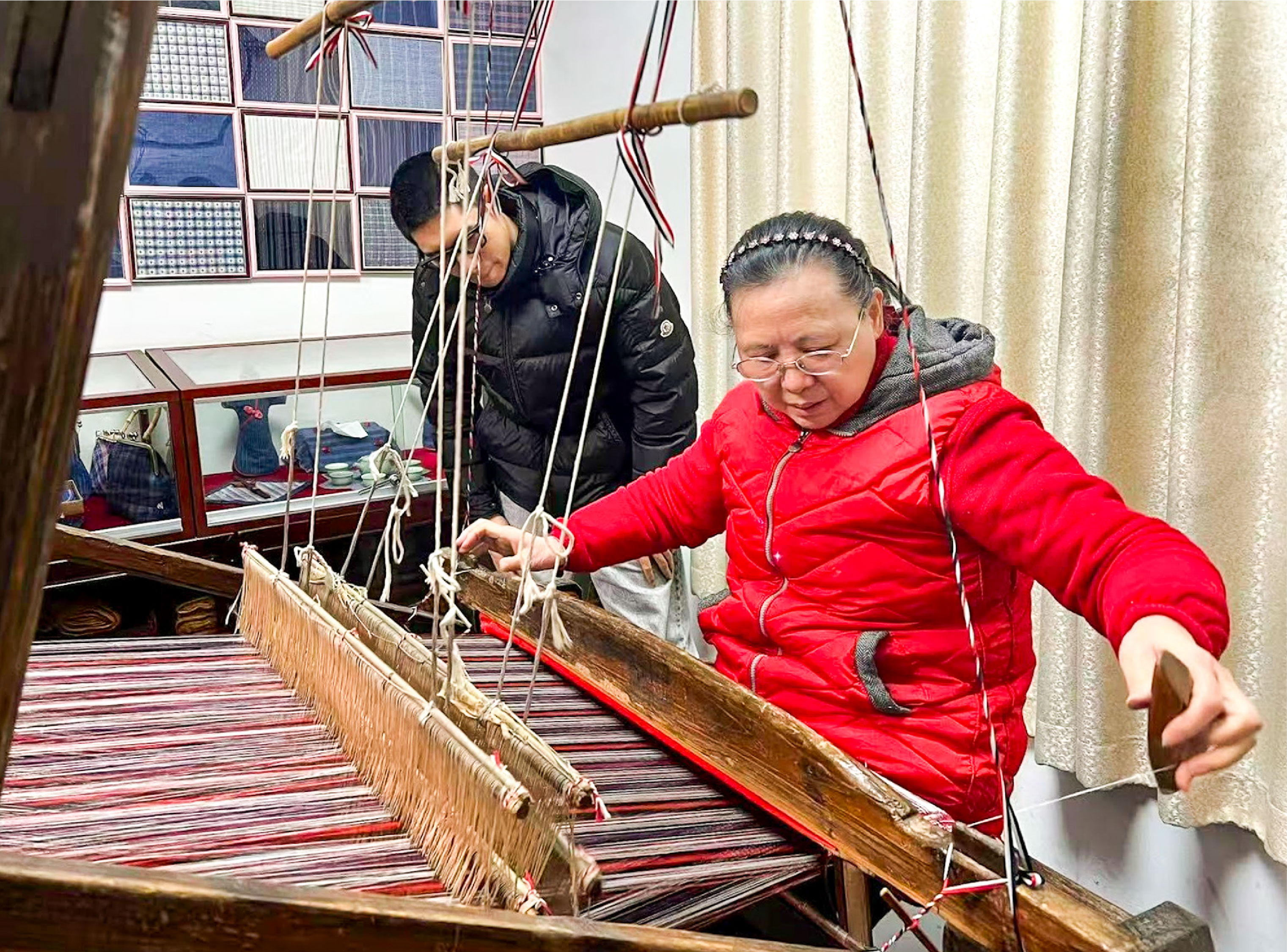
Kevin says he appreciated the experiential nature of the class, combining lectures, workshops, and independent exploration. He and his group mates focused their interviews on two local businesses—a pickle shop owner and a pork rind shop owner—and observed how they discussed the plans for Sanlin’s renovation. They also collected 3D models of the shops and even documented the pork rind-making process.
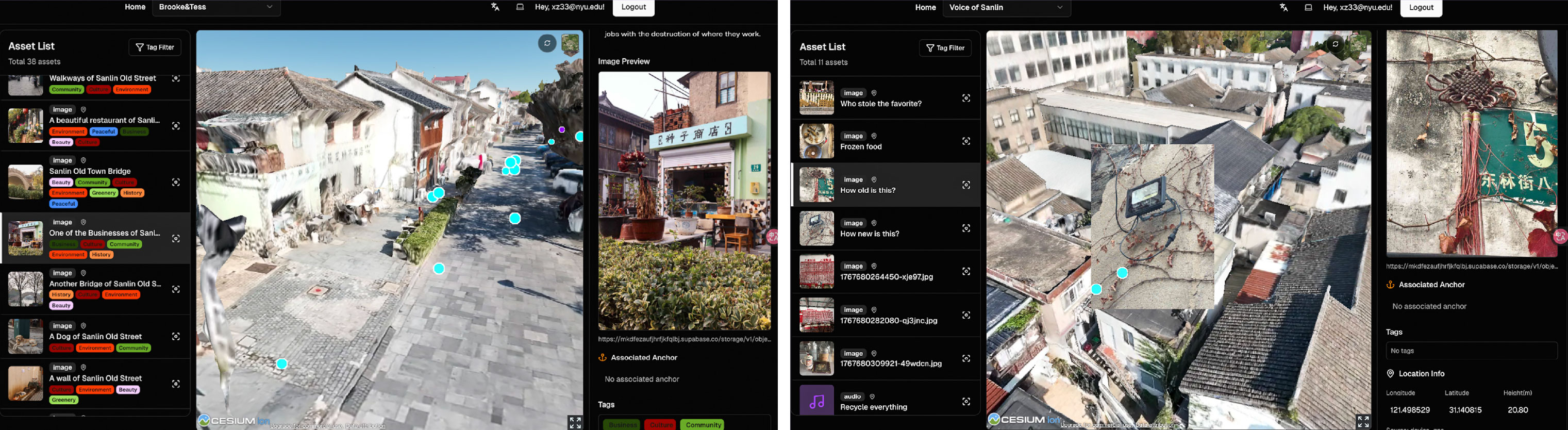
The students’ collected materials now populate a website created by Professor Zhang and Wang Zhewei ’26, a research assistant at the Digital Heritage Lab, as a digital "letter to the future." “We developed an app for collecting assets because they will disappear soon and people will hang up their keys and move out,” said Professor Zhang. “We hope when the old street disappears, we can still find the old things. We are using GPS, so when you hold your phone with this app at a similar location, you can find what the students [recorded].”
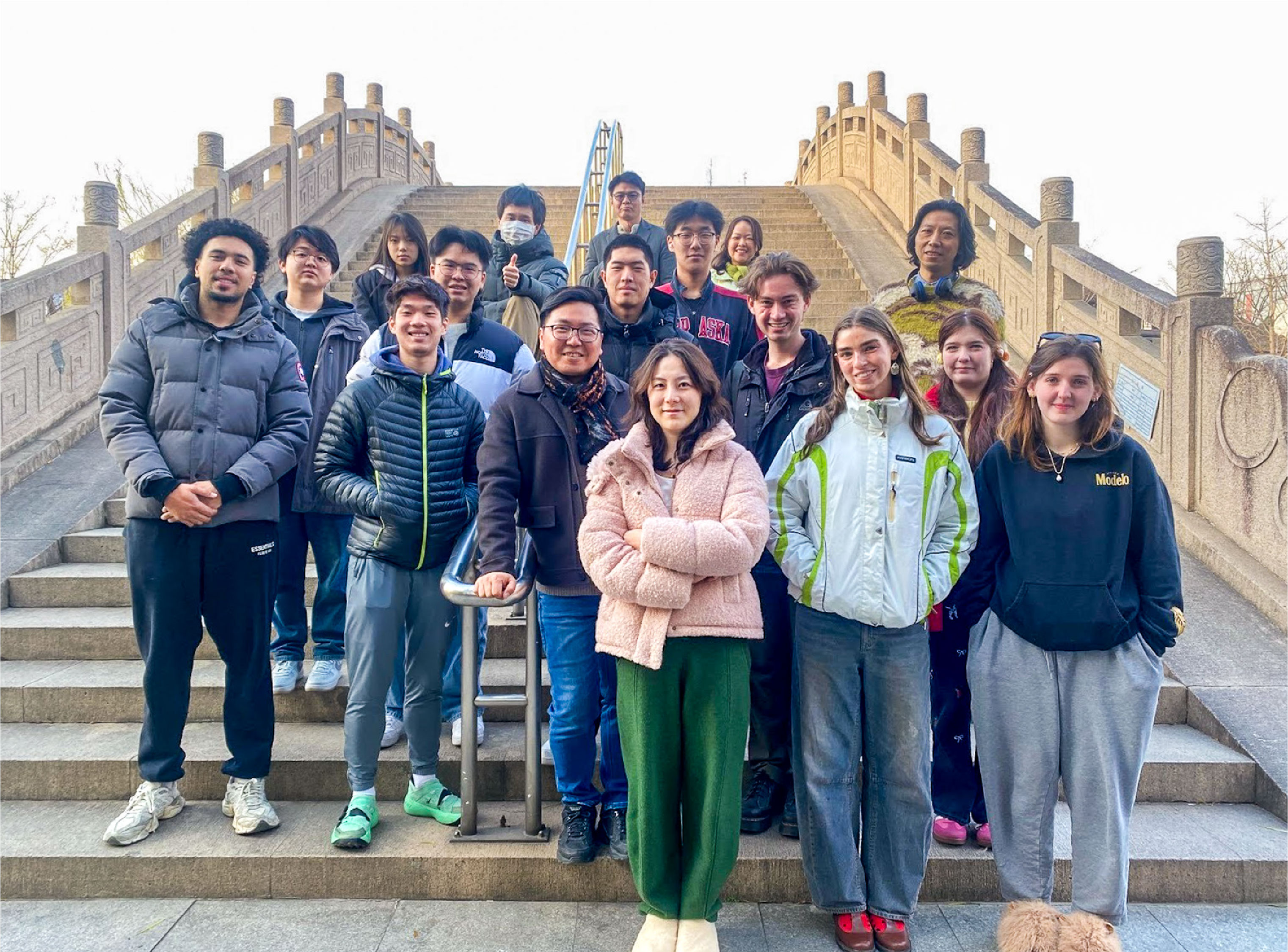
For Zhang, taking students out of the classroom and into the field is especially important in the age of artificial intelligence. “They need to sense physical space and engage with the real world,” he said. “To process what they observe, reflect on it, write on site, and discuss it—that’s very different from office or classroom work.”
That hands-on engagement, Annie Church said, is what makes NYU Shanghai distinctive. “We try to bridge the university and the community,” she said. “It's always a difficult thing to figure out how to actually put into practice, but I think it's really meaningful and I’m really grateful to have been part of it—and to continue being part of it.”