


Life can be stressful sometimes, even without midterms. That’s the impetus behind a number of programs on campus aimed at putting our mental health first.
A series organized by the Center for Student Belonging reminds us to pay attention to our feelings and emotions. The biweekly sessions, run by social work graduate student Ali Motamedzadeh, MSW ’27, are meant to meet NYU Shanghai community members where they’re at and explore concepts such as happiness, emotional wellbeing, and brain development.
Agnes Zhu in the Center for Student Belonging says that today’s society encourages us to chase “happiness” without really appreciating what we already have. Underlying uncertainty about the future can lead many to anxiety. “People feel more isolated, and they just close themselves off rather than interacting with others,” she says.
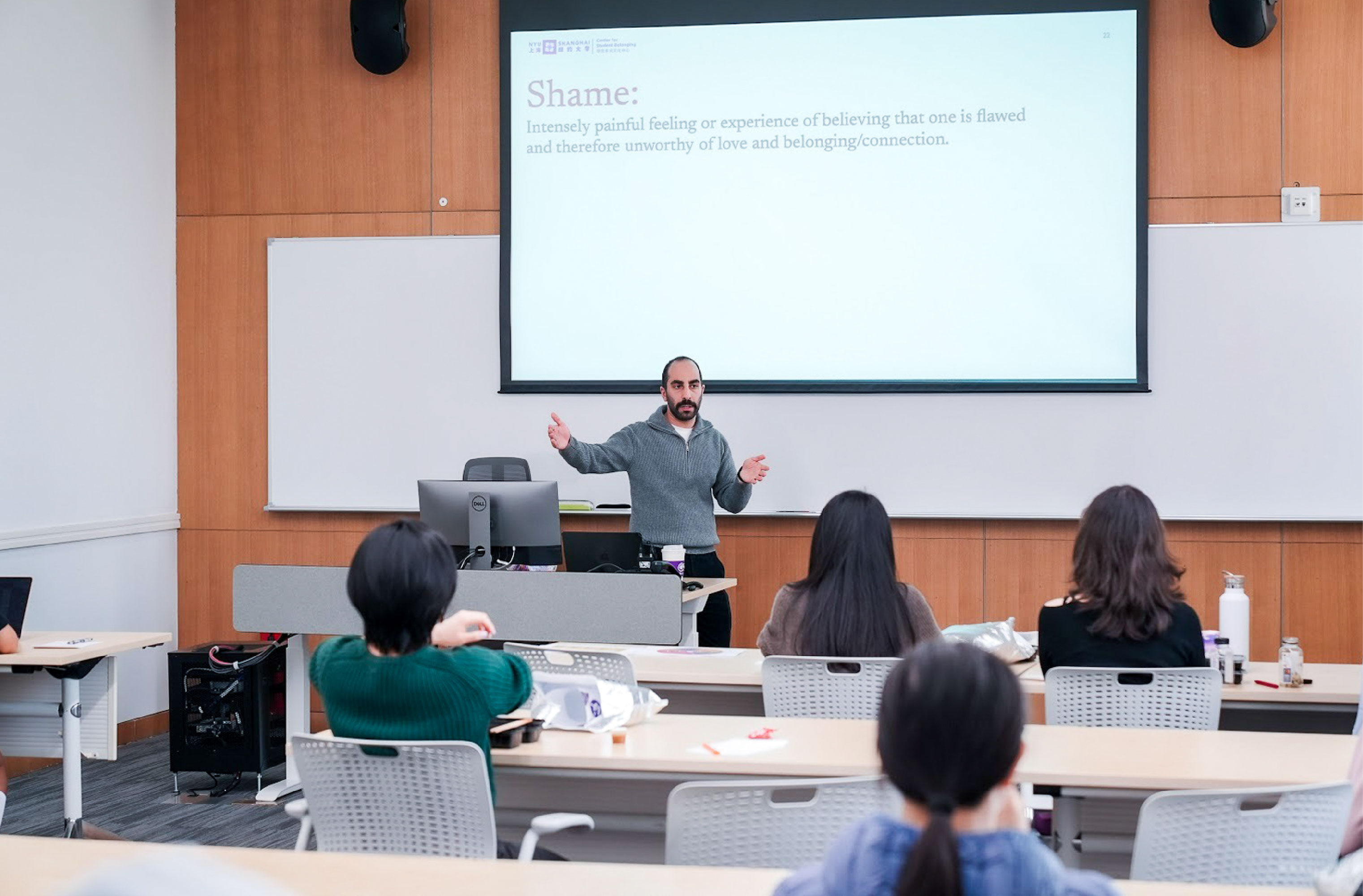
Ali says the Life Skills Lab sessions give community members a space to pause from their busy day and consider their emotions and experiences more deeply. “To know the vocabulary of what you’re going through can really help,” he says.
Theodore Tolan ’26 attended one of the Life Skills Lab talks on Happiness. “I spend a lot of energy and time trying to set up the conditions for myself to be happy,” he says. “I wanted to see how other people were thinking about happiness. The talk made me realize that the conditions for my happiness personally may differ from those of others.”
Upcoming sessions held by the Center for Student Belonging will focus on brain development, relationships, communication skills and building healthy habits.
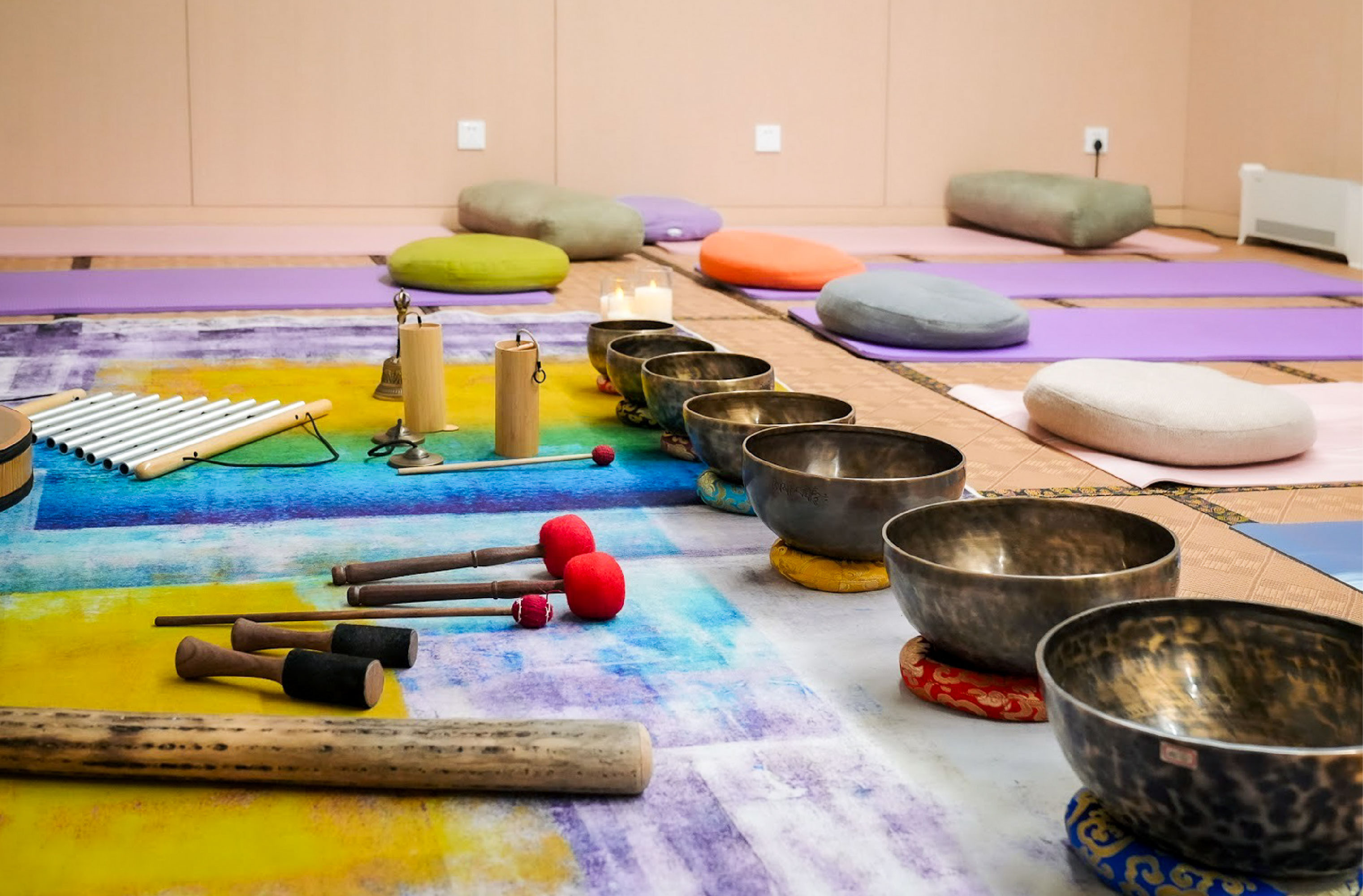
The Student Health Center has a number of programs to help students, staff, and faculty cultivate mindfulness and prioritize their mental health.
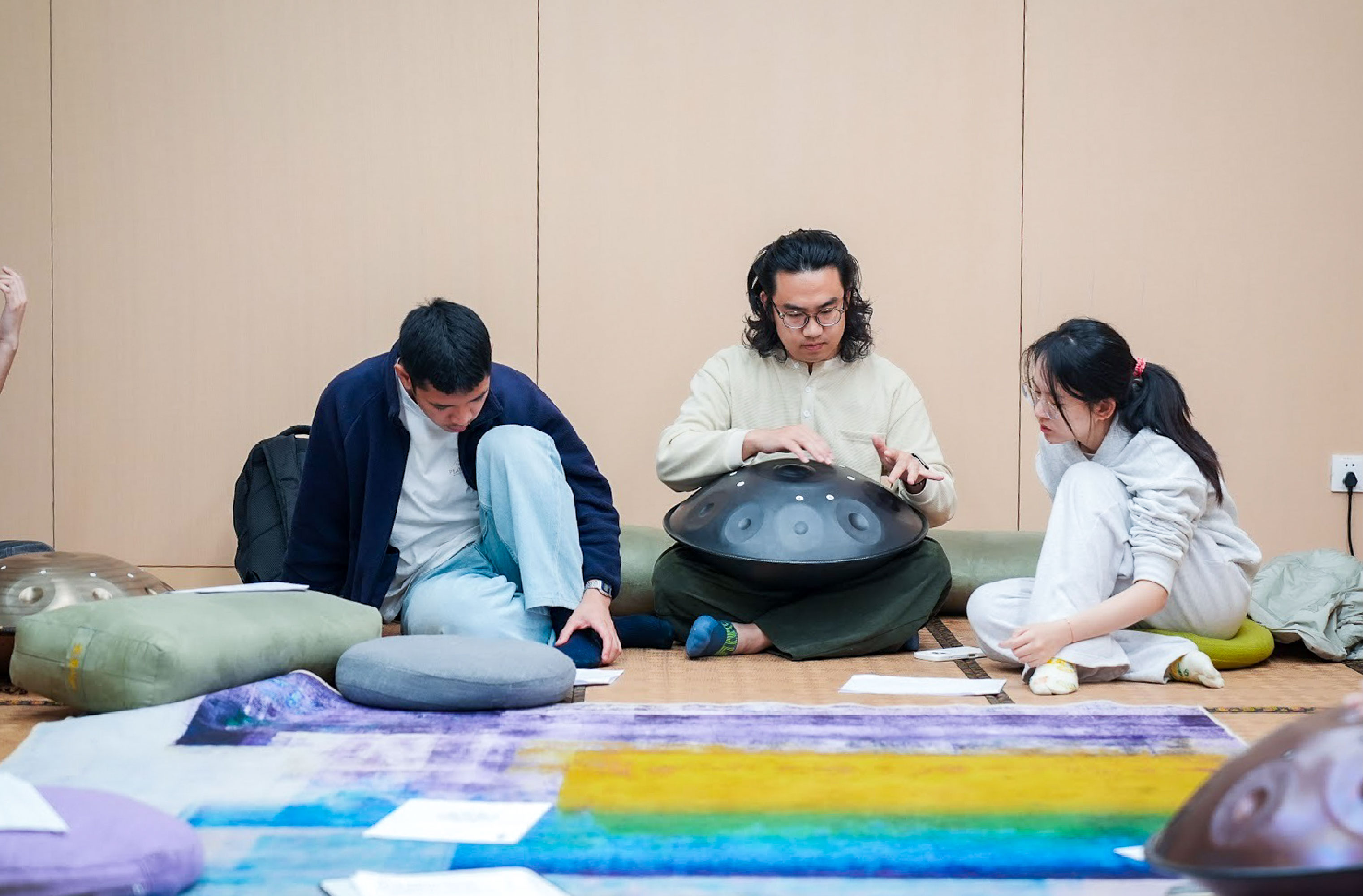
Peaceful melodic tones can be heard emanating from the Calm Corner each week, as students and staff learn how to play the handpan, a UFO-shaped musical instrument. In its third-semester running, the handpan workshops use music as a therapeutic tool to help cultivate mindfulness and support emotional wellbeing.
Yang Shuhan ’29 joined the class eager to learn a new musical instrument. “I learned about the calming effect of handpan later on: about how all the sound you make on it is valid, so you can connect your own soul to it, facilitating a sound mind.”
The Student Health Center offers a range of programming, from weekly singing bowl and mindfulness workshops to broader health campaigns such as sleep hygiene, stress management, and nutrition. Next month, they’ll promote self-acceptance with a series of activities related to loving our bodies. Student health ambassadors play an important role, reaching out to the student body and promoting health initiatives.
Student Health Ambassador Ryan Hiew ’26 says that mental health is just as important as the other things we’ve all got going on. “There has to be a balance; prioritizing the health that sustains us without abandoning the responsibilities that define us,” he says. “I like to believe that we owe it to ourselves to be both well and capable, and it is something I’m constantly striving for each day.”
Last week, the Student Health Center held a day-long mental health first aid training session for faculty and staff members- a day dedicated to teaching participants practical knowledge and skills to identify, understand, and respond to signs of mental health challenges.
Staff and faculty learned to recognize early symptoms of depression or distress, provide initial support to students and colleagues, and practice self-care while working in high stress roles. The 30 participants who completed the full training and assessment received an official Mental Health First Aid certification, valid for three years.
Director of the Student Health Center Chelina Wang says that these kind of training opportunities are crucial to ensure a healthy campus community for all.
“We want to take care of people who work with students directly and see how they (the staff) manage stress,” she says. “We want to build our program not just for mindfulness and relaxation but also professional training– it’s a lot of knowledge and understanding to equip the employees to do a better job, so they won’t feel so stressed about emergencies.”
Check out upcoming events at the Student Health Center and Center for Student Belonging throughout the semester.